Welcome to AIVO News! Our newsletter features projects, events, and opportunities within the NSF AI Institutes Virtual Organization community.
- To subscribe, please complete the AIVO Newsletter Signup Form.
- Contact us (at aivo@ucdavis.edu) to suggest items for an upcoming newsletter issue or to provide feedback.
September 2025 Issue
Table of Contents:
- SAIL 2025 Updates: Program, Panelists, and More Keynotes
- Ed4AI
- AI4Ed
- Partner Panels
- Graduate Student and Postdoc Workshop
- Student Spotlight: Ziming Liu, MIT
- New AIVO Staff Member: Parisa Kafash
- Happenings in the Ed4AI Program
- NSF AIVO Community Roundup
- AI+MPS White Paper: The Future of Artificial Intelligence and the Mathematical and Physical Science
- NSF-Simons Foundation CosmicAI Introduces AstroVisBench
- AIFARMS Releases Complementary Benchmark Data Sets, MIRAGE and AgMMU
- AIFS Co-Organizes Farm Robotics Challenge 2026
- NSF TRAILS Seeks Two Postdocs
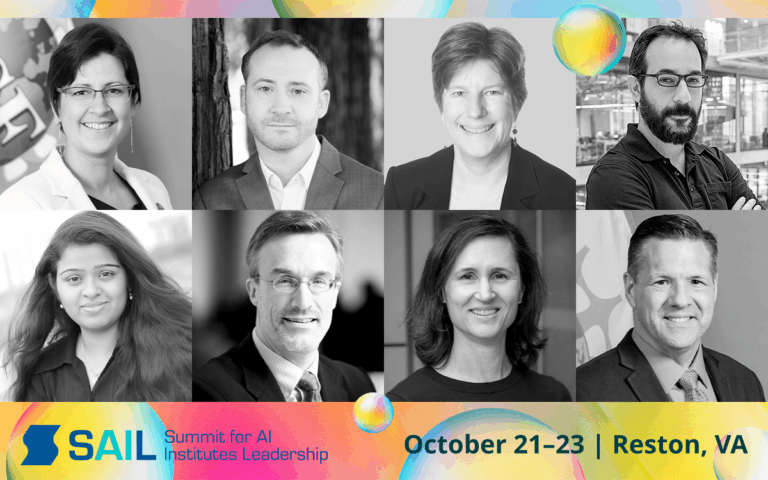
SAIL 2025 Updates
Don’t miss it – the SAIL 2025 Program keeps getting better! If you haven’t registered for the conference already, there’s still time.
Registration closes at 11:59 p.m. on Saturday, October 4, 2025 Pacific.
More Keynotes – Recently announced speakers include:
- Brian Stone, NSF Chief of Staff, Performing the duties of the NSF Director | U.S. National Science Foundation (NSF)
- Dr. Irina Dolinskaya, Directorate Head for Computer and Information Science and Engineering (CISE) | NSF
- Ellen Zegura, Acting Assistant Director, CISE | NSF
- Katerina (Katie) Antypas, Director of the Office of Advanced Cyberinfrastructure (OAC) | NSF
- Manikya Swathi Vallabhajosyula, PhD Candidate and Graduate Research Assistant | The Ohio State University
Learn more about our Speakers on the SAIL website.
Sessions, Moderators, and Panelists – Visit the SAIL Program for a list of sessions and panel speakers. They represent a broad spectrum of the NSF AI Institutes community. And we’re welcoming our two new AI Institutes into the now 29-Institute fold: AI-MI and ARIA.
What else is new on the program this year?
Ed4AI – The Education for AI (Ed4AI) SIG is for all Institutes to connect, convene, and collaborate regarding education and training about AI.
Joint session with the Symposium on Educational Advances in Artificial Intelligence (EAAI) and the Computer Science Teachers Association (CSTA) – The NSF AIVO–EAAI–CSTA Joint Symposium focuses on education about AI at all levels, from K-12 through workforce development.
AI4Ed – The AI for Education (AI4Ed) SIG meeting brings together the five AI Institutes focused on education: NSF iSAT, NSF AI-ALOE, NSF EngageAI, NSF AI4ExceptionalEd, and NSF INVITE.
Partner Panels – The Partner track at SAIL includes:
Session 2 – Industry Collaborations: University Perspectives
Session 3 – Industry Collaborations: Industry Perspectives
Building Your Collaboration (activity)
Plus the Graduate Student and Postdoc Posters Showcase!
Graduate Student and Postdoc Workshop – This inaugural track at SAIL includes a keynote, posters showcase, and a finale complete with prizes for challenge winners.
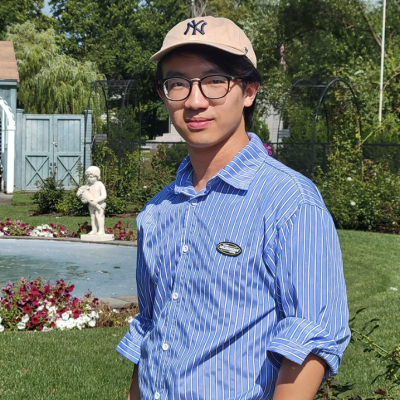
Student Spotlight: Ziming Liu, MIT
AI + Science
NSF AIVO recently talked with Ziming Liu about his work in these focus areas:
- Science of AI: Understanding AI using science
- Science for AI: Advancing AI using science
- AI for Science: Advancing science using AI
He discussed the collaborations he’s formed through his work with the NSF AI Institute for Artificial Intelligence and Fundamental Interactions (NSF IAIFI) and how he seeks to “make scientific discoveries easier and more approachable … the goal of my research is to bring interpretability into AI models.”
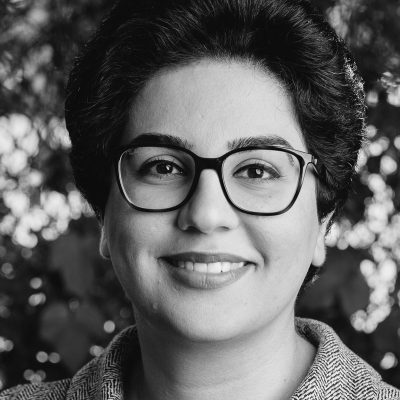
New AIVO Staff Member: Parisa Kafash
Welcome to the AIVO team, Parisa Kafash!
Parisa holds a Master’s degree in Agricultural Economics and earned her Child Development Teacher Certificate. She began her teaching career at Peregrine School in 2022, where she continues to work part-time.
In April 2024, Parisa transitioned into administrative and financial roles at UC Davis Supply Chain Management, supporting both Business & Financial Services and Reprographics.
Parisa is currently a Project Policy Analyst for NSF AIVO, based at UC Davis, where she applies her financial and operational expertise to interdisciplinary research initiatives for NSF AIVO as well as for the AI Institute for Next Generation Food Systems (AIFS). She will be highly involved in SAIL logistics and planning.
Happenings in the Ed4AI Program
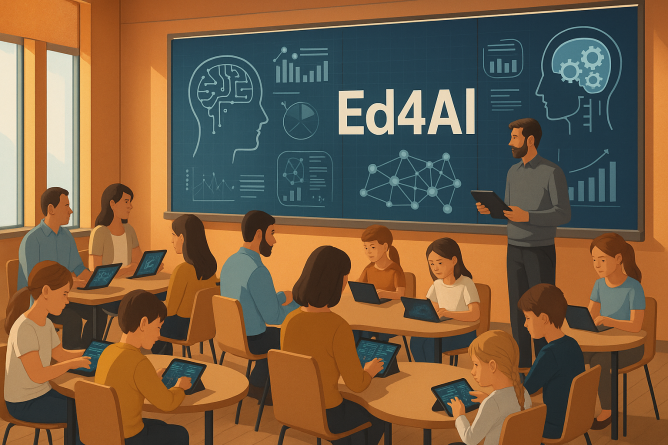
With support from Google.org, NSF AIVO promotes education about AI (Ed4AI) and supports research directed toward supporting education with AI (AI4Ed) through the five institutes who focus in this area doing work such as improving learning through adaptive AI solutions that personalize education, enhance student engagement, and support educators in many other areas.
Within the Ed4AI activities, we have started developing the AIVO Education Portal — a dynamic platform designed to give educators, students, researchers, and members of the public access to the NSF AIVO community’s latest AI-powered tools, curriculum resources, and interactive learning experiences. We are also landscaping the wider AI education community’s best efforts for tools, curriculum, and frameworks. The Portal will serve as a central hub for collaboration, innovation, and continuous learning, helping to bridge gaps in access and drive meaningful educational outcomes.
If interested in spotlighting the work at your Institute, reach out to ciwoods@ucdavis.edu.
Stay tuned as we embark on this transformative journey!
NSF AIVO Community Roundup
AI+MPS White Paper: The Future of Artificial Intelligence and the Mathematical and Physical Sciences
It’s collaboration at its best! Several members of the physical science-related AI Institutes, including NSF IAIFI, NSF MMLI, and NSF-Simons Foundation CosmicAI, participated in an NSF-funded workshop on the Future of AI in the Mathematical and Physical Sciences.Read the white paper the team released on arXiv: “The Future of Artificial Intelligence and the Mathematical and Physical Sciences (AI+MPS).”
NSF-Simons Foundation CosmicAI Introduces AstroVisBench
Researchers at CosmicAI developed a new benchmark to test how well large language models (LLMs) implement scientific workflows in astronomy and visualize results — AstroVisBench.
Accepted as part of the NeurIPS Datasets and Benchmarks Track 2025, the research showed that even the best LLMs struggle to execute scientific workflows.
Read the paper to learn more about the use of AI for scientific computing and visualization.
AIFARMS Releases Complementary Benchmark Data Sets, MIRAGE and AgMMU
The AIFARMS team recently announced that two papers on complementary benchmark data sets were accepted to the NeurIPS 2025 Datasets & Benchmarks Track.
The two data sets, MIRAGE and AgMMU, are curated based on thousands of real-world, user-expert conversations over many years in the Extension Foundation’s Ask Extension service, which provides professional advice to the public on agriculture and gardening topics.
AgMMU focuses on factual knowledge and visual understanding of images, using multiple choice and short-form answers. Read the AgMMU paper.
MIRAGE focuses on long-form answers for multimodal, expert-level reasoning and decision-making in real-world consultative settings. Read the MIRAGE paper.
The MIRAGE benchmark metrics pipeline using “judge LLMs” to evaluate long-form answers is being used for the upcoming AI AgriBench Benchmarking Consortium.
AIFS Co-Organizes Farm Robotics Challenge 2026
Applications for the Farm Robotics Challenge 2026 are open.
Whether you’re a student from high school to college (undergraduate and graduate), “a professor guiding the next generation, a university leader, an industry innovator, or simply someone who believes in the promise of technology and agriculture,” your challenge is clear: Help shape the future of farming!
The goal: Work in teams to identify and solve real-world agricultural problems using cutting-edge robotics or drone technology. Learn how to apply.
NSF TRAILS Seeks Two Postdocs
Seeking two postdocs at the George Washington University School of Engineering and Applied Sciences (SEAS)!
Candidates in any area of research related to developing AI techniques, tools, scientific theories, as well as design and policy recommendations that are intended to promote the trustworthiness of AI systems are invited to apply.
Two-year appointment (P010127)
One-year appointment (P010128)